What was your first experience with Heart Zones?
Around 2017, the PE teachers at North Country Union Junior High School (NCUJHS), Christiane Brown and John Gunn, were in the market for PE technology. They were specifically looking for a heart rate monitor that was easy to use; "that students could easily put on with limited support."
It was the North Country Supervisory Union Health & Wellness coordinator that first introduced Christiane and John to the Smart PE movement. They were very interested in trying Heart Zones technology with their students after seeing how both students and teacher could get immediate feedback with their "Big Board display." At the time, both the PE department and the administration at NCUJHS were in favor of moving away from the heart rate monitor chest strap technology currently in use.
The North Country Supervisory Union was able to secure samples for Christiane and John who were instantly hooked. They advocated for wearable heart rate monitors that promoted "lifelong fitness with instant feedback that gave personalized data" in front of the NCUJHS school board, who then approved the funds needed to upgrade the technology in their physical education program to Heart Zones.
Since incorporating Heart Zones in 2017, North Country Union Junior High School has undergone a significant transformation. NCUJHS Physical Education has always focused on lifelong learning and making sure PE is a safe place for all to participate. Previously, Christiane says that they mainly did the FitnessGram testing to "give students a snapshot of their health-related fitness." But now they have found such value in incorporating the use of heart rate monitors into their curriculum to "give each of (their) students individualized feedback through a class activity which in turn could help motivate them to improve their heart health."
With Heart Zones, the PE team—Christiane Brown, Peter Auclair (who joined NCUJHS in 2023), and John Gunn— have been able to increase the focus on personal well-being. By implementing the Heart Zones Move Solution, students are empowered to understand their own bodies.
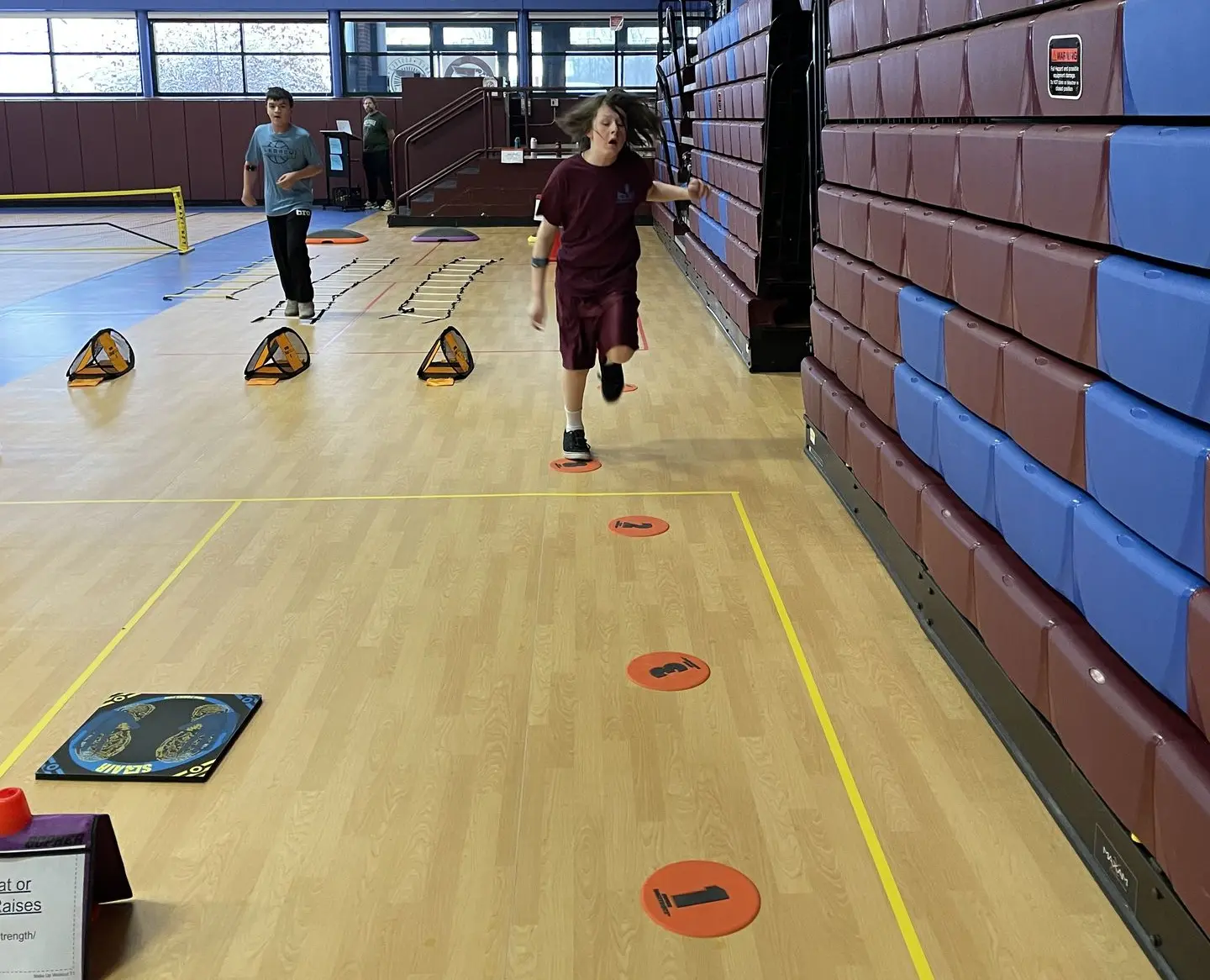
Today, students wearing Heart Zones' heart rate monitors now see real-time feedback in class, allowing them to exercise at their correct, individualized intensity. The result? A PE class where every student can be successful, regardless of their fitness level.
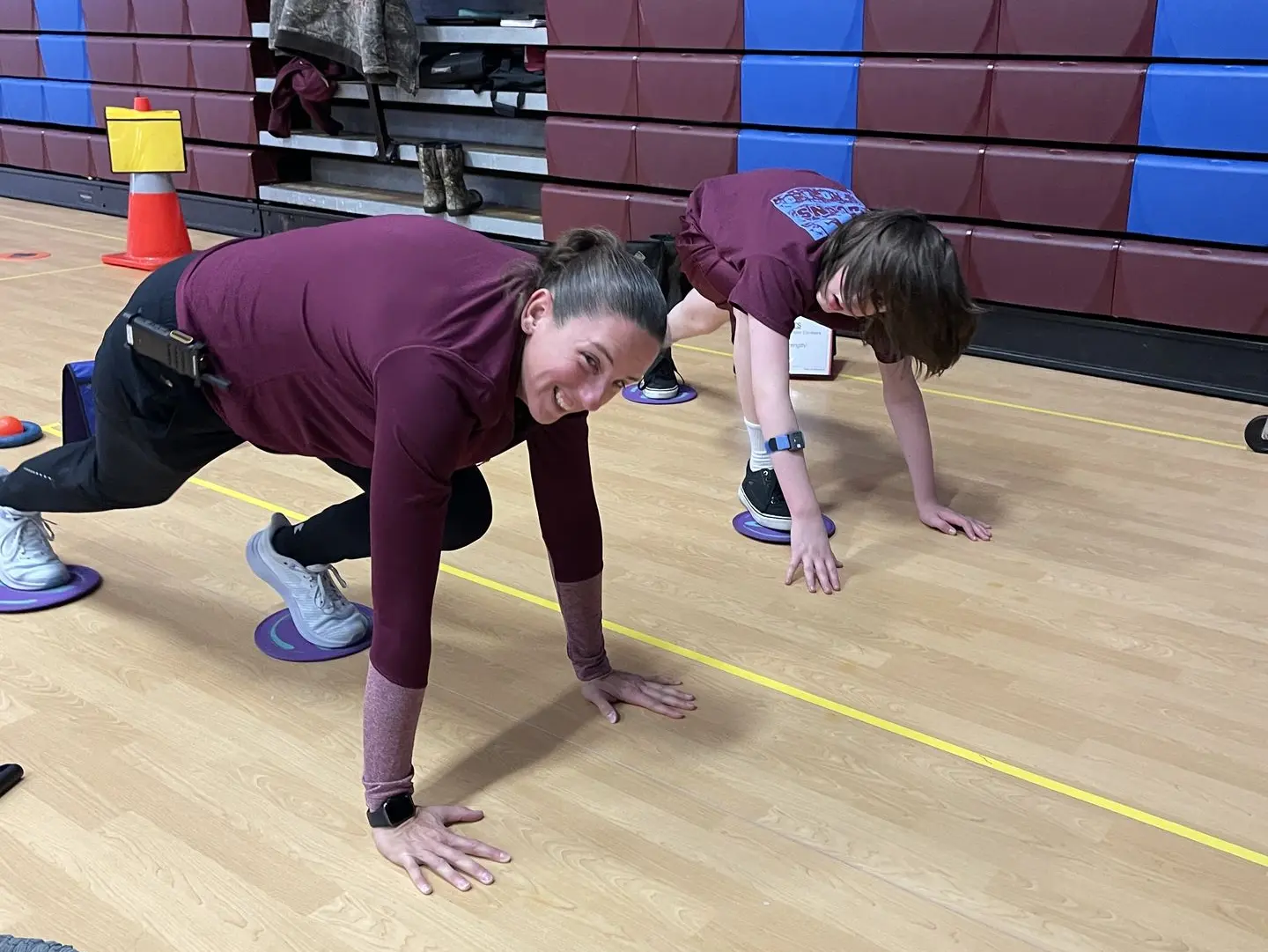
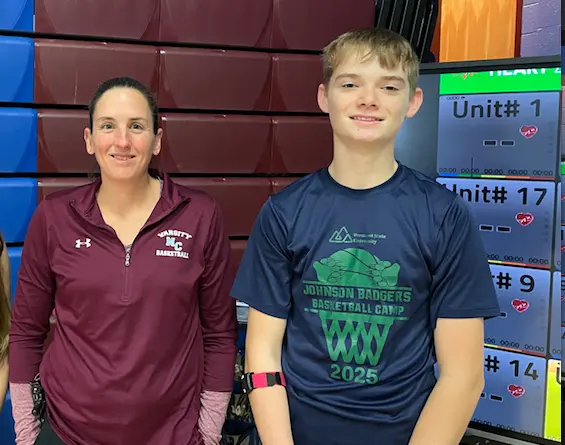
Joey Valenti III, 8th grader with Christiane Brown
Describe your PE program before and then after using Heart Zones. What changed in your program?
According to Christiane Brown, the Heart Zones initiative has fit seamlessly into the NCUJHS PE philosophy. Now with the emphasis on fitness and well-being, thanks to Heart Zones, every student will be empowered to pursue safe and healthy active lifestyles. Using heart rate monitors allows the teachers to objectively assess student and class performance while safely motivating students with instant feedback on a daily basis. For Christiane, the "personal pride exhibited by the students from their effort will be the biggest thing she takes away from using the Heart Zones technology."
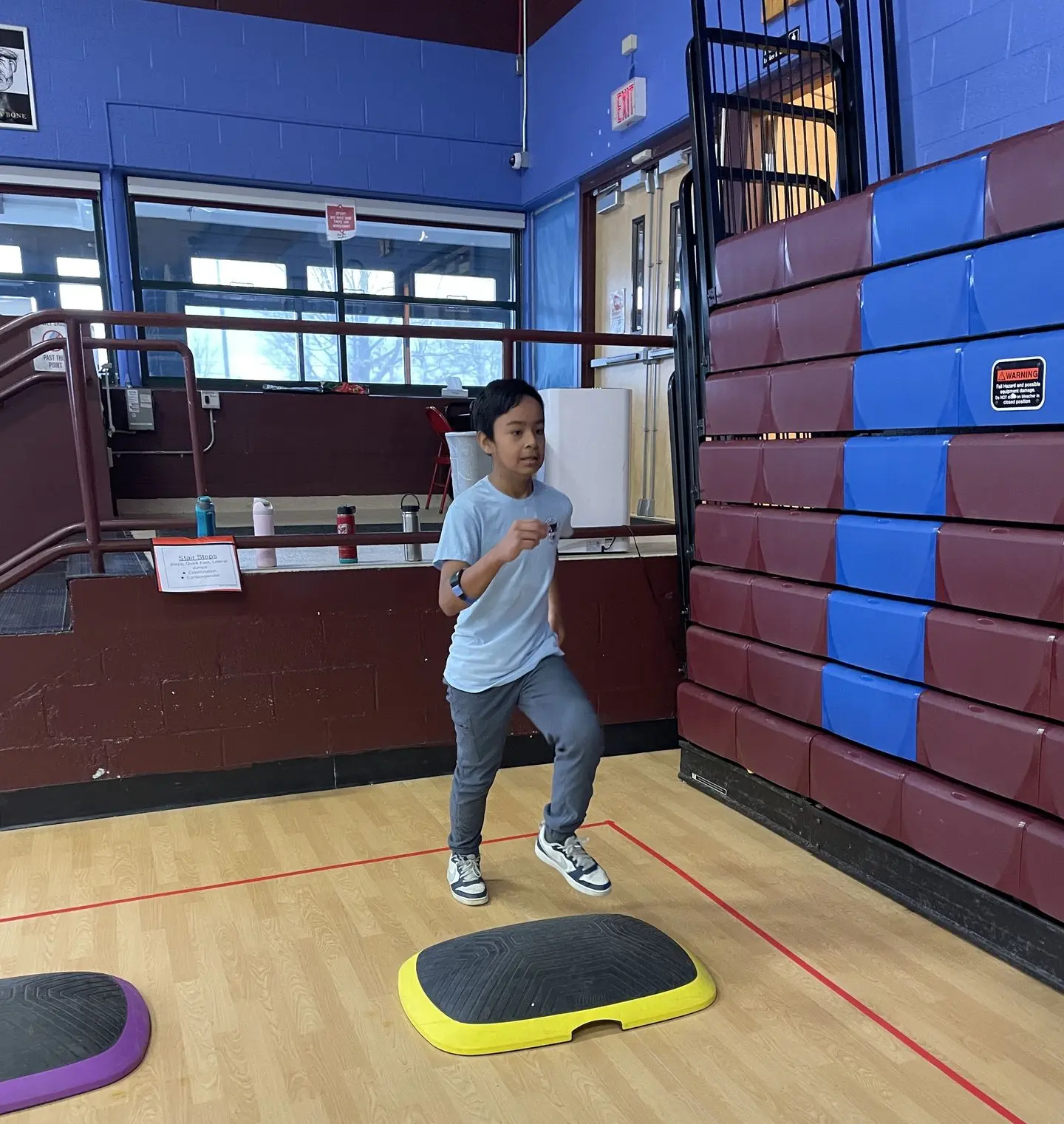
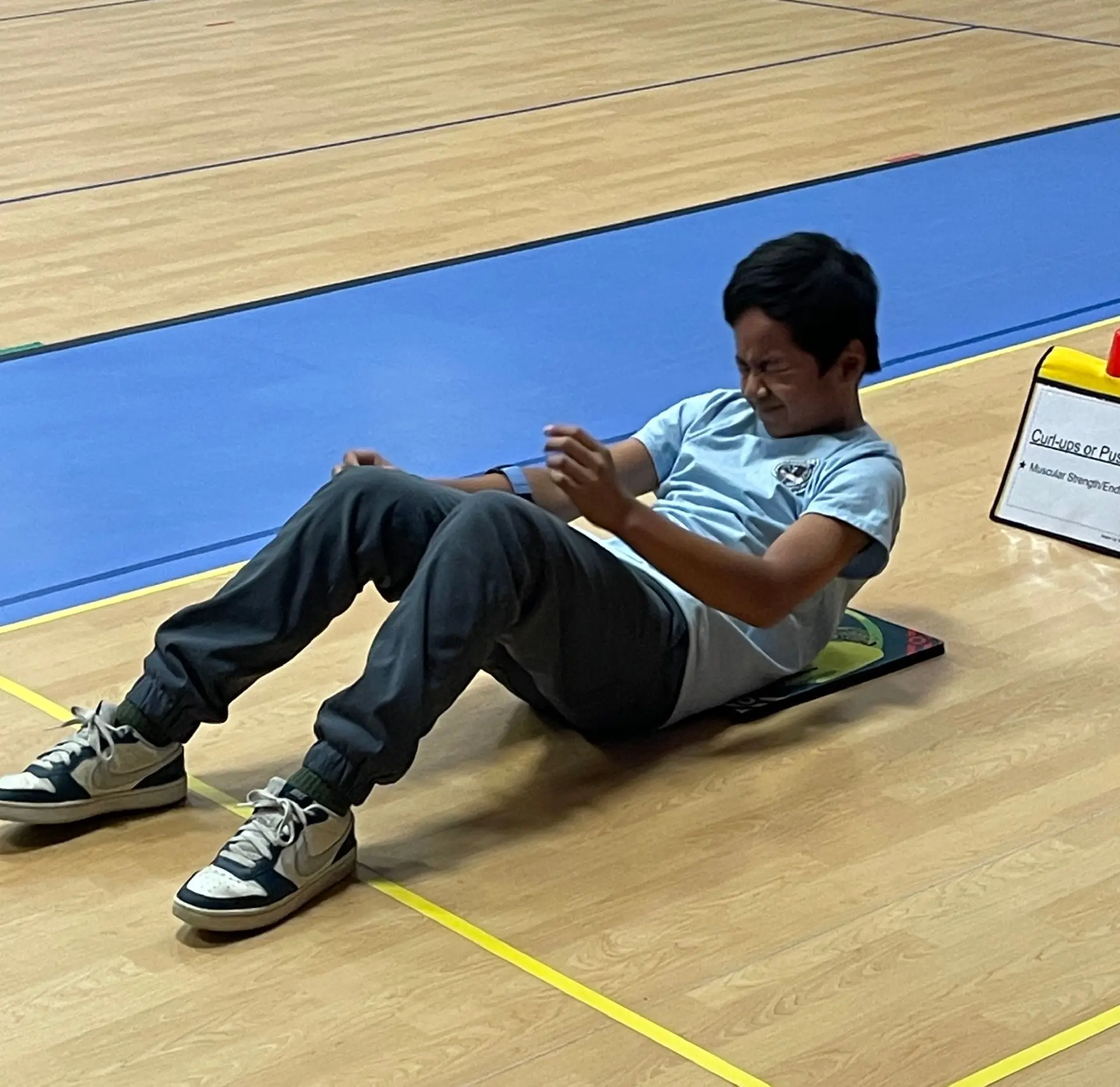
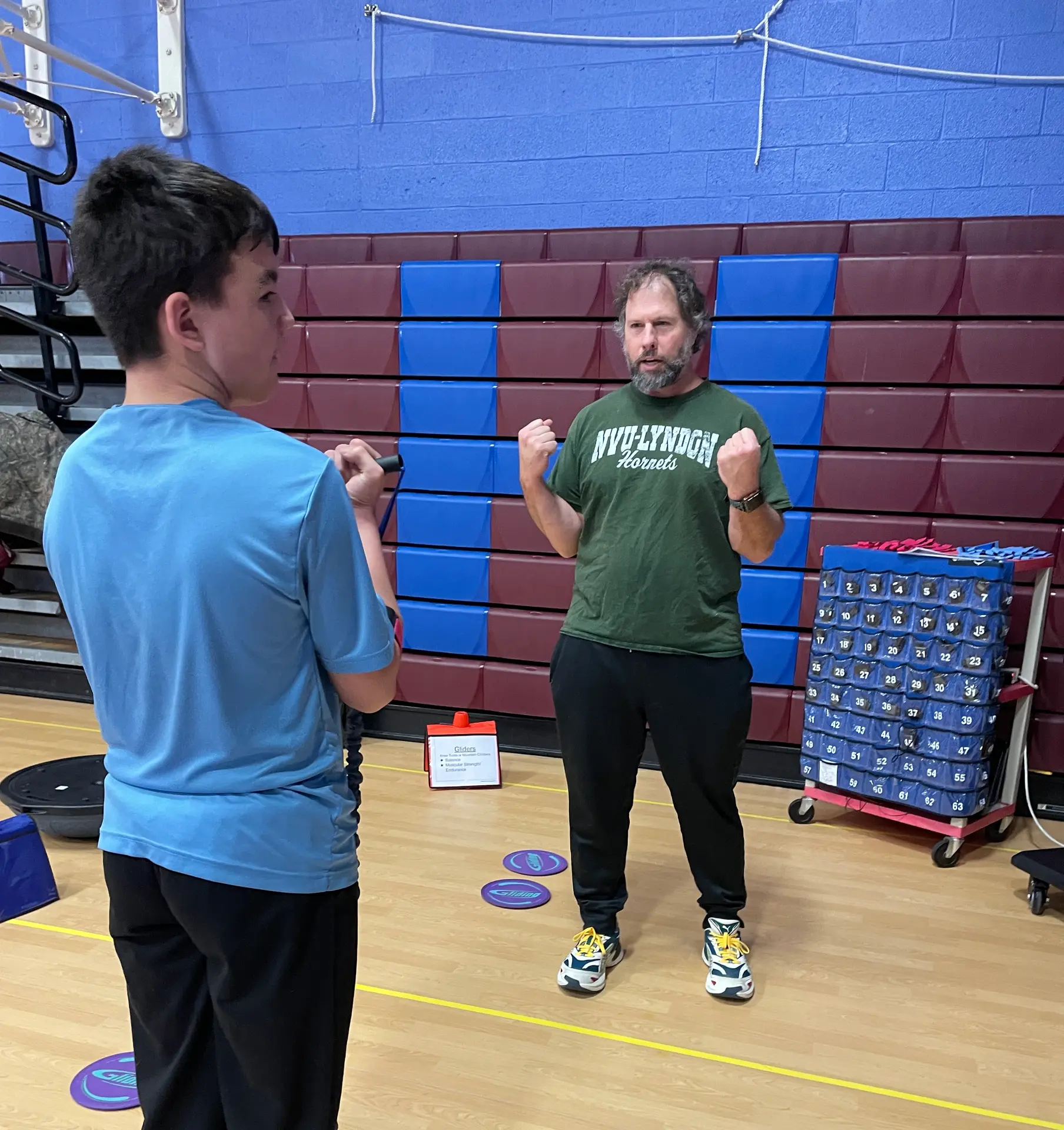
Pictured above: Students, Vyelle Agcaoili and Kaide Kulakowski with PE Teacher, Peter Auclair
PE teacher, John Gunn, adds that Heart Zones has taken out the unhealthy comparison between students instead allowing each student to perform according to what their bodies need. The real time feedback from the Big Board holds students "accountable for their personal fitness choices as they strive to stay in the Moderate to Vigorous Physical Activity (MVPA) Zone." He also notes how student performance improved due to the Heart Zones' wearable technology being on the arm versus the very intrusive and uncomfortable chest straps they previously had.
Before Heart Zones, Peter Auclair would do a variety of exercises and workouts with their students, setting generic goals based on their performance. Now with Heart Zones, he is able to teach students about heart rate zones. Peter lets them "find an intensity that works for them based on their heart rate, and use the data they get from our workouts to help them set goals and challenge themselves."
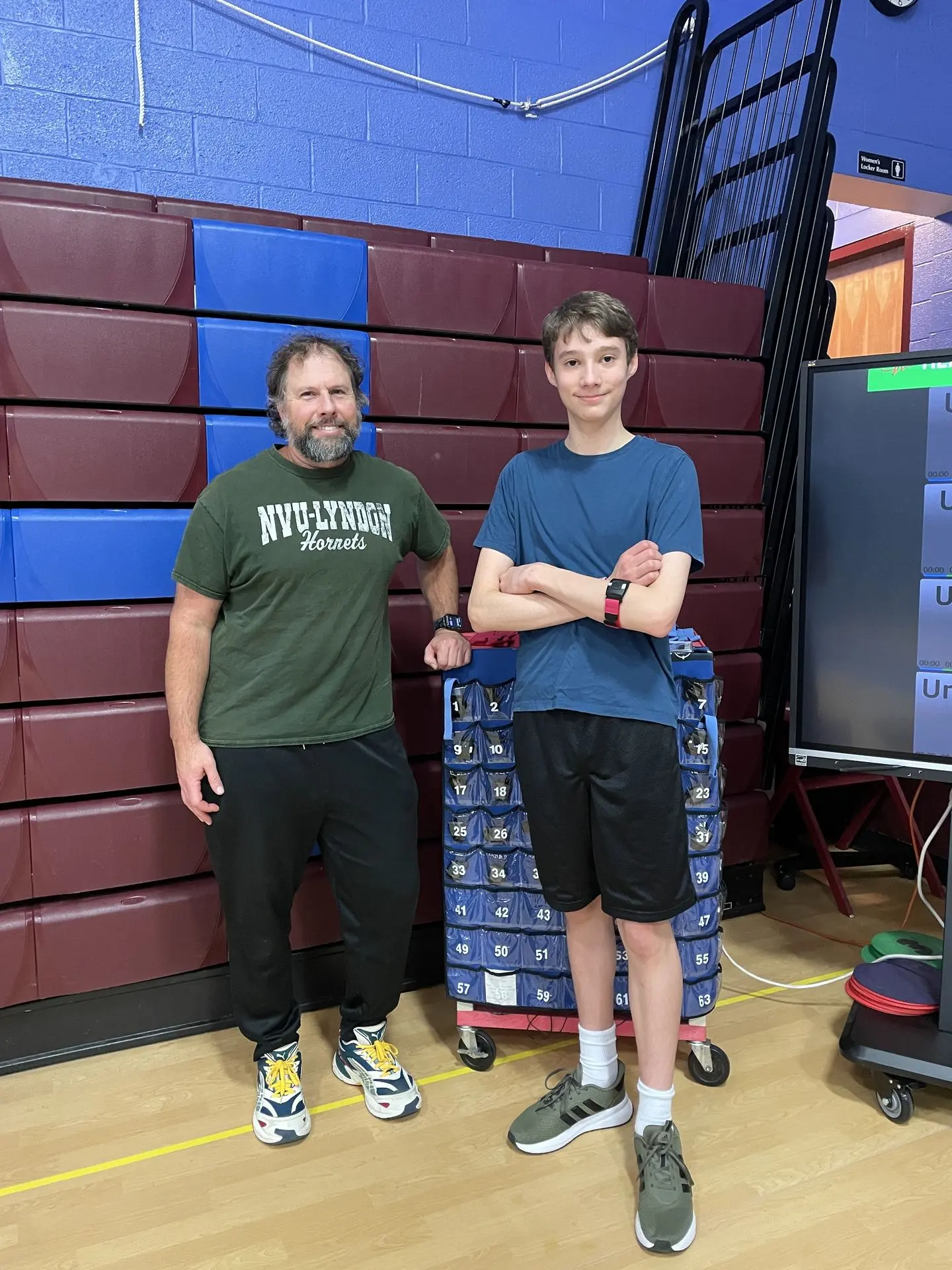
Left to Right (Kaide Kulakowski and Joey Valenti III)
Have there been any challenges that you faced with the facility such as equipment challenges, people challenges, curriculum challenges, etc.?
Peter, John, and Christiane all agree that they have been "very fortunate to have an administration and school board who support the goal and vision of the PE program." Special recognition goes to their former principal, Nicole Corbett, who always found value in the work the PE department was doing with the students and played a large role in securing the funding for Heart Zones. Nicole trusted the approach of the NCUJHS PE teachers and their knowledge in the field. But the former principal at NCUJHS is not the only faculty member who has seen Heart Zones' wearable technology in action and believe in its positive benefits.
what have others in administration or on the faculty said about your innovations?
The current principal at NCUJHS, Edie Flores, also agrees that "with guidance from PE teachers, students learn to adjust their activity levels for optimal health, set personal fitness goals, and track their progress independently." With Heart Zones, students are able to choose activities of various levels of exertion that reflect both their personal preference and fitness level.
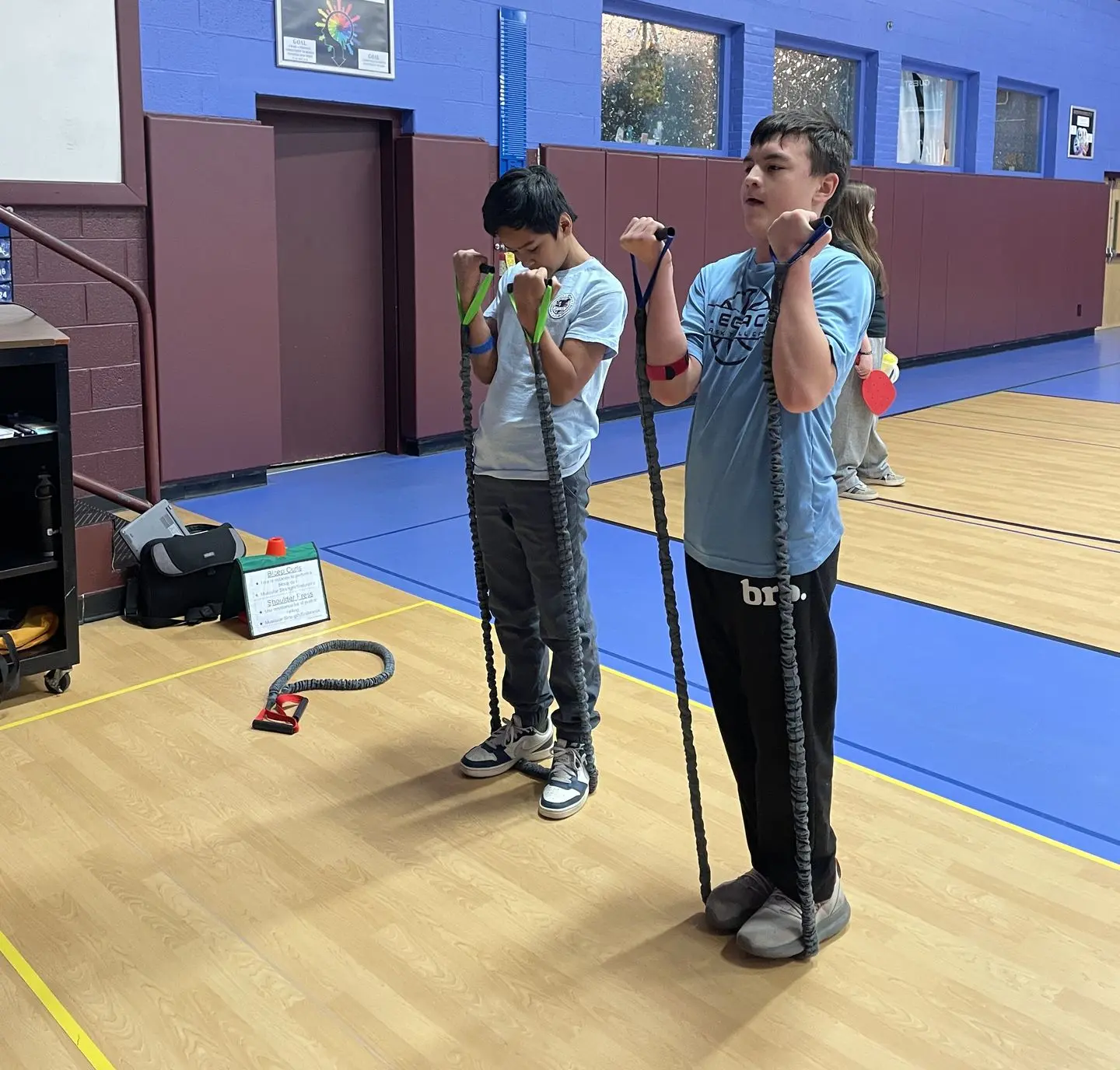
Left to Right (Vyelle Agcaoili and Kaide Kulakowski)
John Gunn, as the Dean of Students and Athletic Director at NCUJHS, believes that Heart Zones has been "the absolute best addition to the NCUJHS Physical Education Program in my 30 plus years in the business." Over the years, NCUJHS has been able to utilize Heart Zones not just in physical education, but in cross-curricular teaching with science. Karen Lacroix, the NCUJHS science teacher, remarks how they "love the connection with science and refer to this unit when students are learning about the cardiovascular system and homeostasis in their classroom." When using Heart Zones' technology, Karen has noticed that the students really enjoyed the unit as they learn about their body and it's different reactions.
" The use of heart rate monitors in PE classes empowers students to take ownership of their learning and well-being by providing real-time feedback on their physical activity. "
what do you like the most (or the least) about using Heart Zones?
Peter Auclair likes the instant feedback students see when using Heart Zones. He sees it as a "great tool to help motivate our students." After a workout, students receive an email with a summary of how they did throughout their class. The challenges he has encountered so far with Heart Zones has mainly been monitor placement. For some students, they may need the monitor relocated to a different part of their arm for a more accurate measurement. In turn, Peter expresses his need to double-check his students to make sure they have put it on correctly.
While PE teacher Christiane Brown agrees that confirming proper placement on students to ensure a strong connection is an obstacle, she does love "how quickly students can put their heart rate monitor on." When using the Heart Zones' Big Board, Christiane has noticed how students can see instant and accurate feedback during PE. She sees Heart Zones as a tool that can truly help students "build confidence and knowledge to improve their heart health."
" The information recorded during a workout is amazing…from time spent in each zone, heart rate information, and the graph measuring the heart intensity during the workout. "
From your student's perspectives, how have they experienced heart zones?
" Personally, I like the Heart Zones monitors. Being able to see my heart rate during exercises allows me to do my best and try my hardest. The monitors themselves work very well and are super comfortable, and the color coding of the heart zones are easy to understand. Being able to see when I should do a cool down exercise helps me feel good after doing the exercise and stops me from being too sore. I am glad our school is able to use the heart zones monitor, and I hope I get to use them later in my school life. "
Holden Houlihan, NCUJHS 8th Grader
" Heart Zones (is) a good way to see if you need a break because your heart rate is too high or if you can keep going. It is important to not overwork yourself, so it's good to have something that can tell you that you need to slow down a bit. "
" The Heart Zones monitors work exceptionally well. They fit rather comfortably, and turn on and off just how they should. You only have to hold the button for about 5-10 seconds, and as long as you have it on right, the corresponding tile seems to display the information accurately, though it may be slightly delayed. So other than that, Heart Zones appear to have zero flaws. "
Noah Nadeau, NCUJHS 8th Grader
" I think that having the ability to have the Heart Zones in our school is a great experience. I think this because it shows us what we need to work on to get our heart rate up and it is pretty cool to see what our heart needs in terms of making it strong and healthy. This is important because keeping your heart strong and healthy is essential to our health because it is a proven fact that maintaining ideal cardiovascular health can add over six to eight years to your life expectancy compared to having poor heart health. The last reason why it is a great experience is because it makes me feel like I have done something productive even if the day is going bad or slow. So that is why we should have Heart Zones in every school and why it is a great experience. "
Teegan Charland, NCUJHS 8th Grader
" Using the Heart Zones monitors lets me accurately see what my heart rate is so I can up my pace or calm down. It helps a lot when doing exercises. "
" Actually, I enjoy the Heart Zones activities. I get to know how I'm doing during our activities which I love. Sometimes the monitors would take a minute to wake up so not all of my activity was recorded which was fine. Overall, I do like the Heart Zones technology. "
Arianna Staples, NCUJHS 8th Grader
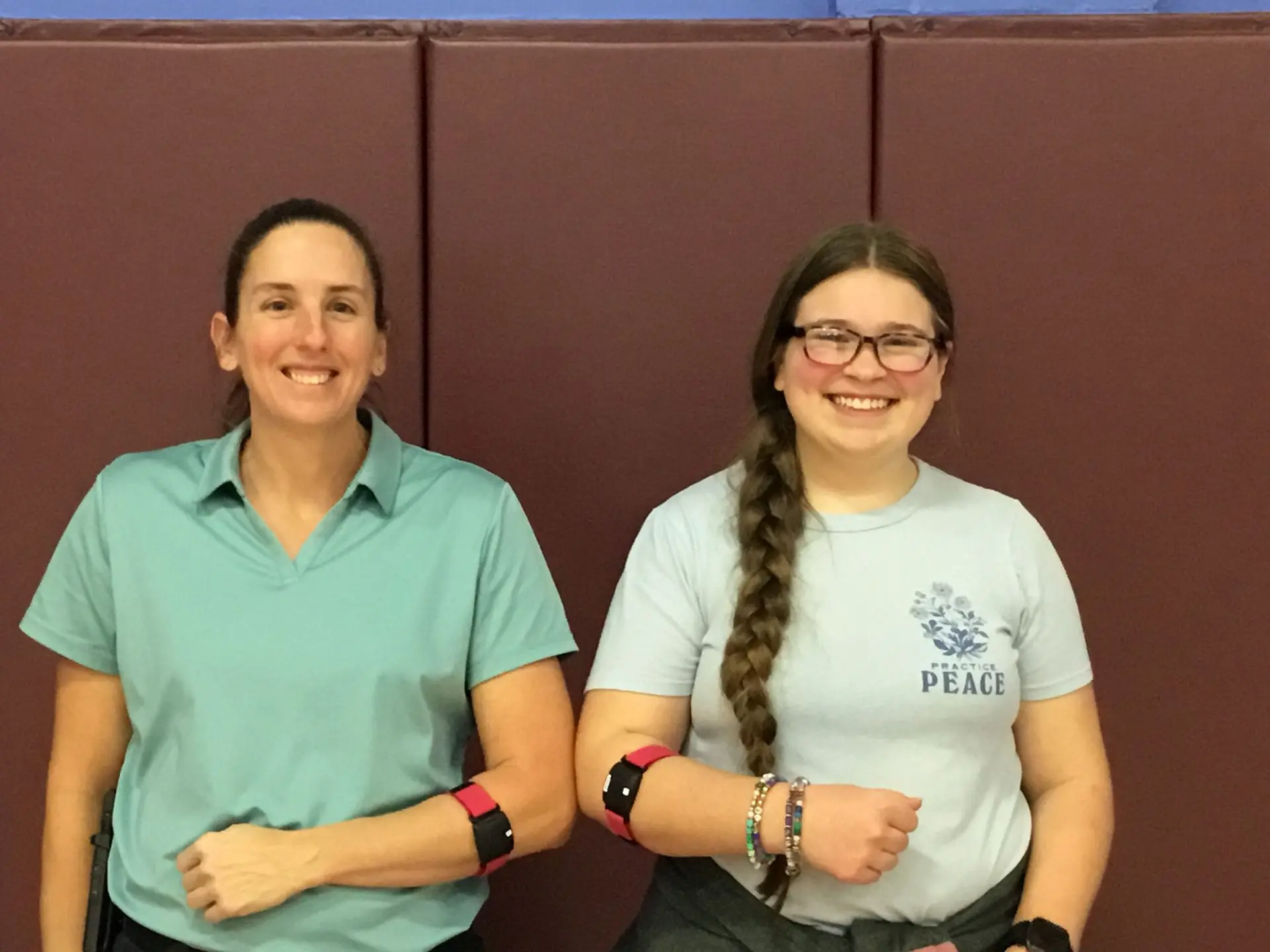
" Heart Zones' heart rate monitors have completely changed my experience in PE. I appreciate how they create a sense of fairness for students who may not be naturally athletic or very interested in sports, like me. The monitors let me see the actual effort I’m putting in, even when it’s not obvious to others. I’ll be honest, I don’t particularly enjoy PE, but I do understand why it is important, and because of these monitors, I will try my best each time. "
Juliana Lewis, NCUJHS 8th Grader
How else has Heart Zones affected your PE Program?
The PE teachers at NCUJHS share how, as a PE department, they have created workout routines that include the health and skill related components of fitness. "The workout routines typically last 20 minutes and are all individualized based. Some workouts have a choice component of which exercise to perform and others have a set number of exercises to complete. The format varies for each workout: some are station work for a set time before rotating and others are individuals rotating at their own pace. The workouts are an assessment grade tied to SHAPE America National Physical Education Standards. (Standard 2: Applies knowledge related to movement and fitness concepts. 2.8.10 Self-selects and monitors physical activity goals based on a self-selected health-related fitness assessment.)"
Prior to participating in the workout routines, NCUJHS "integrates Heart Zones within (their) Personal Fitness Spot routines, cooperative games that incorporate teamwork and fitness, and lessons geared toward understanding the 5 different zones. Students are working on the following Learning Target:
- I can monitor my intensity to improve my health and skill related fitness.
- I can feel good during and after my workout.
Each student will indicate their MVPA Goal prior to participating in the workout.
Goal: I will monitor my MVPA (moderate vigorous physical activity) time to maximize my effort."
MVPA Time | MVPA% | Proficiency Grading |
11:59 below | 0% - 59% | Insufficient Evidence - IE |
12:00 min 14:59 min | 60% - 70% | Beginning - BG |
15:00 min 15:59 min | 70% - 74% | Progressing - PR |
16:00 min 16:59 min | 75% - 79% | Approaching - AP |
17:00 min 19:00 min | 80% - 90% | Meeting - MT |
19:01 min 20:00 min | 91% - 100% | Exceeding - EX |
Finally, share about your teaching backgrounds & if interested readers can contact you.
Christiane Brown started working at North Country Union Junior High School just out of college and has been teaching middle school PE there now for 22 years! She participates with other PE Teacher Leaders in the district to "help organize opportunities for fellow PE/Health educators."
Currently, Christiane is coaching several sports at many levels across the district (including middle school basketball that she is currently teaching for both boys and girls). She is also a referee for middle school soccer, and helps oversee middle level sports for students across the district.
Peter Auclair has been in the physical education teaching field for 23 years, a similar teaching experience as Christiane. He has been at NCUJHS for 3 years now but has been working with K-8 students, including running many different types of fitness programs, for years. Peter has coached all levels of sports from Elementary to High School. He has also been a referee for a variety of sports and has organized various clubs and programs throughout the years.
John Gunn, the Dean of Students and Athletic Director at NCUJHS, has 31 years of experience in teaching physical education. Part of why they all back the use of Heart Zones at NCUJHS is because with the decades of teaching experience they have between the three of them, they can all agree that "getting students active and helping them find something they enjoy" are key factors for them.
Want to learn more about how you can get your students active and motivated? CONTACT US