
In the competitive landscape of private education, academic rigor has always been the gold standard. But as parents increasingly seek a holistic, future-proof education, the criteria for "excellence" is expanding. Today, the most enticing institutions are those that integrate innovation into every aspect of their offering, specifically within the realms of physical education and student wellness.
For school leaders, this isn't just about updating the gym; it's about leveraging technology to transform physical activity into a personalized, data-driven science, making your institution undeniably more attractive to the modern family.
1. Data-Driven Wellness: The Language Parents Understand
We live in a data-obsessed world. From sleep trackers to smartwatches, families are accustomed to quantifiable insights into their health. Traditional PE, while valuable, often lacks this objective dimension.
Enter Group Heart Rate Solutions (e.g., Heart Zones):
Imagine a Physical Education (PE) program where every student, regardless of their natural athletic ability, receives personalized, real-time feedback on their effort. Heart rate monitors and activity trackers do exactly this.
- Individualized Learning: Activity data shows students if they’re working at an intensity that is safe and effective for their specific body. This empowers every child, from the bookworm to the athlete, to understand their own physiology.
- Objective Assessment: For parents, this translates into tangible proof of engagement. Report cards can include personalized fitness and health metrics that celebrate individual effort and improvement rather than just "points scored."
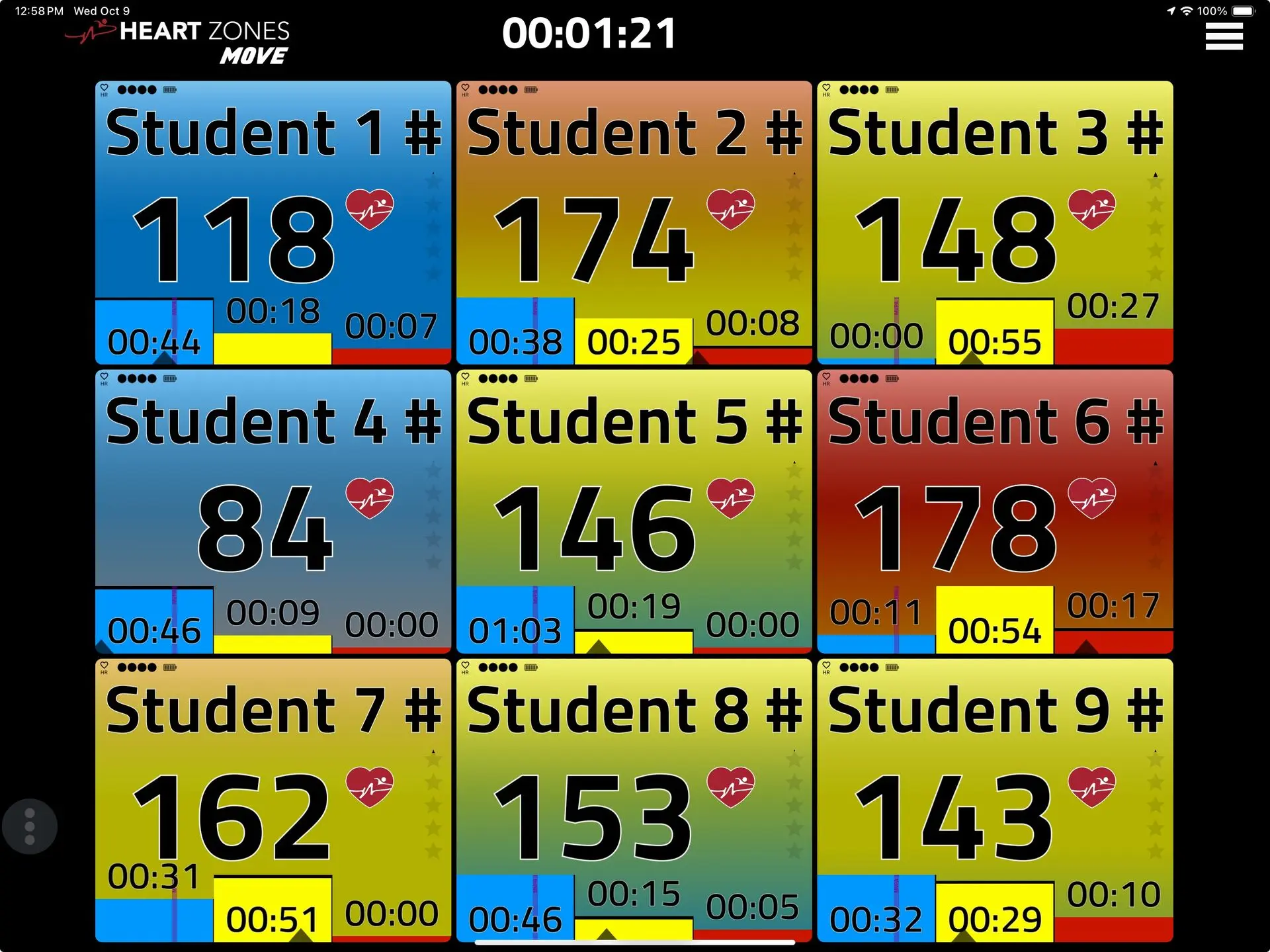
- Gamification & Engagement: Visual dashboards make fitness interactive. Students can see their effort levels in real-time on a screen, transforming PE into an engaging, science-backed experience.
2. Safety Comes First: Spotting the "Silent" Signs
The primary concern for any school staff member is the safety of their students. While schools have long focused on physical security and bullying prevention, technology now allows for a deeper level and type of safety.
- Cardiac Safety:
- One in 100 students have some type of hidden heart defect
- 2,000 young, seemingly healthy people under age 25 in the United States die each year of sudden cardiac arrest (SCA)
- Approximately 1 in 25 U.S. schools can expect to have a student SCA event each year
- Early Detection of Abnormalities: While heart rate monitors are not medical diagnostic tools, they act as an essential "first-alert" system. In a classroom setting, the Heart Zones technology can provide early warning system for irregularities that have gone undetected to date.
- Identifying "Silent" Conditions: Research shows that smart wearables can sometimes pick up irregular rhythms or tachycardia that traditional annual physicals might miss. By tracking data over months, schools can provide parents-stakeholders with a baseline, allowing them to take "yellow flag" data to a medical professional for screening.
- Preventing Overexertion: Especially in extreme weather or high-stress periods, real-time biometric monitoring ensures students exercise safely, preventing heat stroke or cardiac strain.
3. A Science-Based Approach to Mental Health
When technology is integrated into wellness, it moves physical education from the "playground" to the "laboratory." High-achieving students face significant academic pressure, and parents are increasingly looking for schools that help manage this.
- Stress Management: Using heart rate technology to teach "emotional recovery and mindfulness-based physical activity demonstrates to parents and guardians you are investing in student mental health.
- Biofeedback for Regulation: Systems like Heart Zones technology teach students to recognize the physical signs of anxiety (elevated heart rate) and learn emotional to successfully self-regulated, a life skill that applies directly to the classroom performance.
4. Fostering Lifelong Health Habits
The ultimate goal of PE is to instill habits that last long after graduation. Technology makes this connection relevant to the 21st-century student.
- Wearable Integration: Students learn to interpret data from their own devices, bridging the gap between school activities and their personal lives.
- Digital Wellness Portfolios: Students can build records using physical literacy to set their achievements and health goals, resulting in learning deeper about themselves and their wellbeing.
Visualizing the Future: The Tour Experience
Imagine a school tour where prospective parents and guardians visit your PE program to see modern-day Smart PE, using smart devices which lead to smart students. In Smart PE these folks see student’s heart rate or activity zones as live actionable data for engagement and motivation. This demonstrates a tangible commitment to innovation, to safety, to student excitement. Here's the best way to show, visibly to your stakeholders, that your facility is preparing their children for a healthy, successful life in a technologically advanced world.
Don’t let your wellness program be the reason a family chooses the school down the street. In an era of data-driven parenting, a "standard" PE class is no longer enough. Transform your gym into a high-tech wellness lab and show prospective families that you prioritize their child’s health with the same rigor as their SAT scores.